Writing Tips        Vikings        Medieval History        Ancient Rome        Architecture        Old West        Travel        Vocabulary         
Showing posts with label pioneers. Show all posts

Historical Tidbit Thursdays - The California Gold Rush - Sutter's Mill - #TidbitThursday

Howdy!

Welcome to Historical Tidbit Thursdays. Today I wanted to share with you some interesting tidbits I learned about Sutter's Mill during the infamous California Gold Rush! Hope you enjoy!


Johann August Sutter, born on February 15, 1803 in Germany, he was unsuccessful in his businesses in Switzerland and declared bankruptcy before leaving his family behind for America. He changed his name to John Sutter.

On April 31, 1848 he was given a land grant of 50,000 acres in California on the Sacramento River. He established a colony Nueva Helvetia (New Switzerland).

He builds Sutter's Fort to protect settlers from the local Indians. He partners with James W. Marshall, a carpenter, with the intention of getting rich off lumber. They build a saw mill at the junction of the American River with the intent to float and lumber down the river and then ship it out.


The mill was actually built on Indian lands. At this time, individuals were not allowed to trespass Indian lands but John ignored that and went ahead with his plans.

Marshall dams up the stream so he can repair their mill and when he releases the water, he finds gold. The workers deserted. The local store owner, Sam Brannan, went to San Francisco to spread the news and to sell gold-searching equipment (becoming California's first millionaire).

The land around the mill was not legally Sutter's so he could not reap any payments from all those squatters and gold-seekers. In fact, they caused a lot of destruction and stole his livestock. Eventually Sutter moved out.

Hundreds of millions of dollars were extracted from that area but no one got rich (except those that sold supplies).

Source: The American Heroes Channel - "What History Forgot" series; episode 2 "Making America; What History Forgot series website.

Photo Credits:
Sutter's Mill - https://www.parks.ca.gov/?page_id=484
Johann August Sutter - https://www.britannica.com/biography/John-Sutter
Sam Brannan - https://www.pbs.org/weta/thewest/people/a_c/brannan.htm

Video Review - Travel Channel - Legendary Locations - John Thompson


Josh Gates hosts several interesting series on the Travel Channel. This particular series focuses on locations that are steeped in myths, legends, or famous events. Today, we're taking a look at John Thompson, a simple mailman in this episode titled "About Time".

Legendary Locations - About Time

Season 2 - Episode 7

Description:

From a cursed clock in Prague to a death-defying rescue in the snowy Sierra Nevada Mountains, Josh Gates explores six legendary locations that have withstood the test of time.

Highlights:
1850's Sierra Nevada Mountains, site of the infamous Donner party crossing, is where native Norwegian John Thompson operates as a mailman.
To get through the snowy places, John used a single ski of oak longboards that measured 9 feet long and 1.5 inches thick as well as a long pole that he held horizontally for balance. This getup earned him the nickname "Snow Shoe Thompson".
December 1856, John finds a nearly frozen fur trapper, James Sisson. He carries him to Mormon Station. Due to the frozen condition, the doctor needs to amputate, but the doctor has no antiseptic.
So John skis to Placerville but the druggist is out of antiseptic.
This time John rides a horse over 40 miles to Sacramento, California. He is able to get the antiseptic and rides all the way back to Mormon Station.
Thankfully, James Sisson survives the amputation of his legs.

See info on the series here - TravelChannel.com

Check your local listings for showtimes, your local library for copies, or watch on Amazon:

Historical Tidbit Thursdays - Hired Gun Tom Horn - #TidbitThursday

Howdy!

Welcome to Historical Tidbit Thursdays. I caught an interesting show on Tom Horn in an episode of the "Cowboys and Outlaws" series and wanted to share some of the tidbits I gleaned from it here.

Tom Horn was born in 1860 in Missouri and started his career as a cowboy.

He left home at age 13 working odd jobs such as night livestock drover and then managed herds for the U.S. Army in Arizona. He was also a skilled tracker.

At age 26, he became the Chief of Scouts in Arizona during the Apache Wars and was part of the posse to capture Geronimo.

At age 28, he became a rodeo star.

He joined the Pinkerton Detective Agency to chase outalws. He would hunt men for months.

At some point, he began to kill men instead of arresting them, becoming something of a hired gun. Men in Wyoming were willing to pay more for him to kill cattle rustlers.

August 1895, he is arrested for the murder of a homesteader, William Lewis, but his backer, one of the cattle barons, hires the best lawyers to get him cleared.

A secret cattle baron group forms with the goal to eliminate two known cattle rustlers operating in Colorado. Tom would earn about $600 for each murder (in today's money that would be about $15,000 each)

Tom Horn was convicted in 1902 of murdering a 14 year old boy (Willie Nickell) the son of a sheep rancher involved in a range dispute with cattle ranchers. Tom was hung in Cheyenne, Wyoming a day before his 43rd birthday. It's believed during his stint as a hired gun that he killed at least 17 people.

Source:
"Cowboys and Outlaws" video series - "Frontier Hitman (Tom Horn)" episode


Historical Tidbit Thursdays - The Indian Tipi - Etiquette - #TidbitThursday

Howdy! Welcome to Tidbit Thurday!

Although Native Americans were called "savages", they actually had pretty strict rules they lived by and guide their manners.

Etiquette regarding entering someone's home was simple enough - if the door was open, friends could walk right in. If the door was closed, the visitor would call out or shake the door covering. They would wait to be invited inside.

A pretty funny joke was that if someone heard knocking, it was a government agent.

If a visitor found two sticks crossed over a door, that indicated the owners were away (or really didn't want company). Usually the smoke flaps would be crossed over the smoke hole to close it (and not allow smoke to escape).

In some tribes, inside the tipi, men typically sat on the north side and women sat on the south side. When entering, a man moved to the right walking behind anyone who was seated until they reached their spot. The seated person would lean forward. If the guest needed to walk between a seated person and the central fire, they would pardon themselves.

Typically, men would be served first starting with the oldest. The host would wait until all the guests had eaten before partaking of the meal. Guests were encouraged to eat everything they were given or else carry it home.

When the host cleaned his pipe and set it aside, that was the signal for guests to leave. They did not waste time on lengthy goodbyes.

Source:
"The Indian Tipi: Its History, Construction, and Use" by Reginald and Gladys Laubin
ISBN#0-8061-2236-6

Historical Tidbit Thursdays - The Indian Tipi - The Fire Keeper - #TidbitThursday

Howdy! Welcome to Tidbit Thurday!

In some Native American tribes and cultures there is the concept of the Fire Keeper. Not unlike the Olympic Torch Bearer, this person carries a live coal in a special container (like a prepared horn slung over the shoulder) to the next camp to light the fires. In some tribes, the coal came from a sacred fire place and would like the next sacred fire.

Once the Fire Keeper kindled a fire, women would light their own tipi fire from it. The fire was kept alive until it was time to move again.

Every night, the fire was allowed to die down. The coals would be covered in their own ash. In the morning, the cold ashes would be scraped aside to reveal the live coals.

Source:
"The Indian Tipi: Its History, Construction, and Use" by Reginald and Gladys Laubin
ISBN#0-8061-2236-6

Historical Tidbit Thursdays - The Indian Tipi - The Tipi Fire - #TidbitThursday

Howdy!

Today we're going to take a look at the tipi fire, the very central necessity that provides warmth and, in colder weather, a means to cook food.

A typical tipi fire consists of a ring of stones containing wood and burning material. In more permanent homes (such as a winter home or a summer home that will remain in place for several months), a shallow put would be dug.

The size of the ring varied by the tribe and the size of the tipi. Cheyenne and Arapaho built there ring 12"x25"x3". Comanches, Kiowas, Blackfeet, and Sioux built theirs 18-20" across.

The type of wood used to burn varied by the location and season. Wood that burned longer, threw less sparks and omitted less smoke were preferred. Hardwood (such as Willow, Cottonwood, Service berry, Chokecherry, Mountain maple, River birch) was best. Maple and Ash were good choices. Evergreens gave off too much smoke and sparks. Aspen gives off a lot of sparks but not a lot of smoke and smells sweet. Pine gives little heat. Burning Birch also has a sweet fragrance. Alder was known as "stinkwood".

Wood gathering was a community effort. Stacks of firewood were stored inside the tipi to the left of the doorway.

Sticks were used as pokers. Pipestem were used to fan coals. Narrow saplings were used as tongs.

Little chunks of greasy fat were tossed into fire for additional light.

Source:
"The Indian Tipi: Its History, Construction, and Use" by Reginald and Gladys Laubin
ISBN#0-8061-2236-6

Western Travel - Heritage Farmstead Museum (Part Twenty) - Plano, Texas - #TravelTuesday

Welcome to my weekly column #TravelTuesday featuring places I've discovered during my research trips or just wandering around in historical areas. I hope you enjoy my discoveries.

Last week we went inside the one-room school house on the property of the Farrell-Wilson House. Today we'll visit some of the animals on the farm.

&nsbsp;
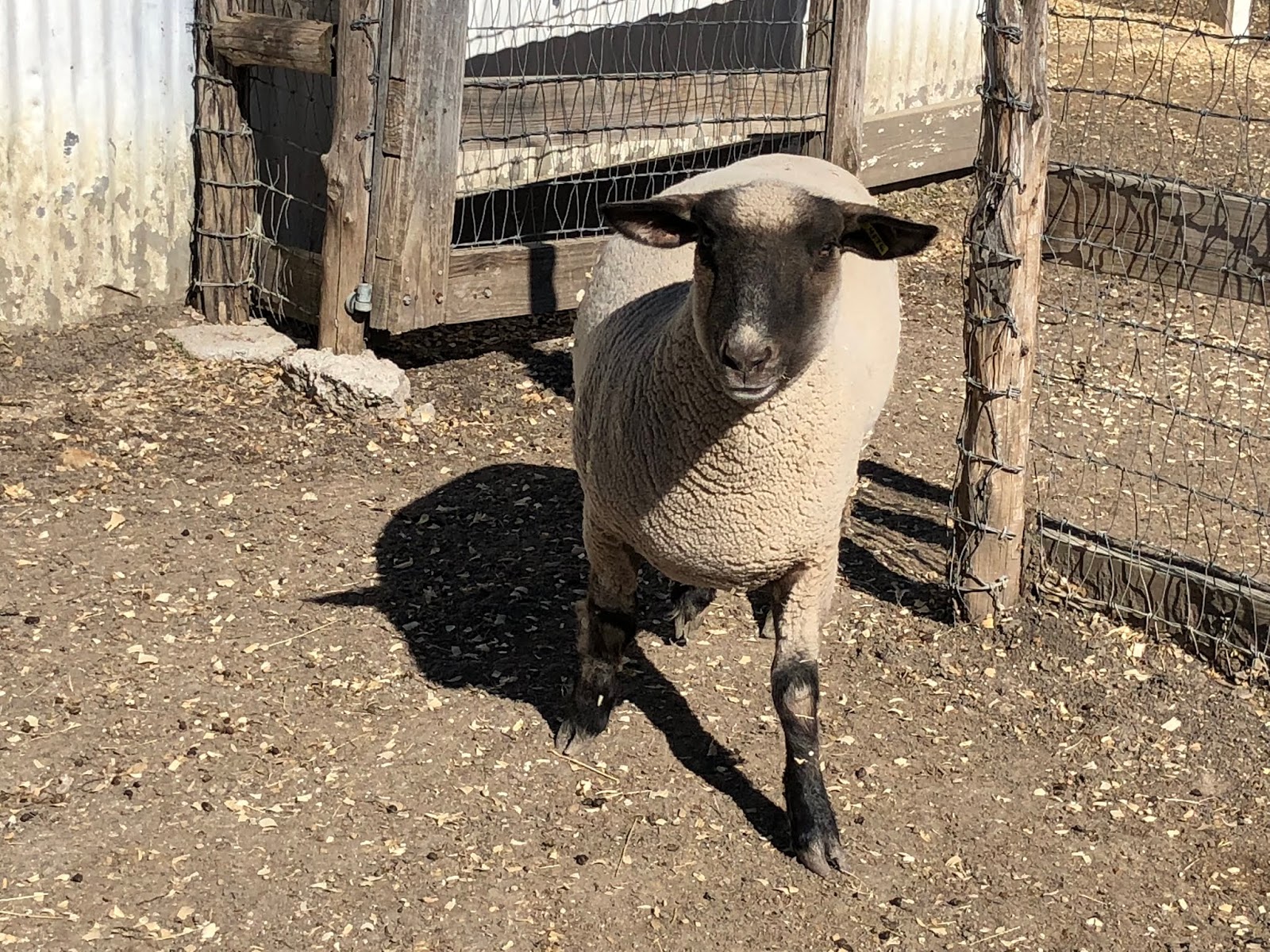
Aimee Wilson was a champion sheep raiser and won several awards for her sheep. The sheep currently living on the farm are similar to those that would have lived here during that time. (Just FYI - they do not offer a petting barn/zoo or the ability to feed these animals during your visit).

 
Big pigs (who really do oink and wallow in mud).

 
One rooster and many chickens.


A guinea fowl perched on a railing. Messy, aggressive birds.


And finally a burrow.

Learn more by checking out the official site - www.heritagefarmstead.org/

boy's Heritage Farmstead Museum Physical Address: 1900 West 15th Street, Plano, Texas 75075 Phone Number: 972-881-0140 Hours: Tuesday-Sunday: 10am-4:30pm. Closed Mondays and major holidays. Admission: $3.00 per person (ages 3 and up) + $4 for tour of house

Photo Credit of Staged School Room - https://www.heritagefarmstead.org

Western Travel - Heritage Farmstead Museum (Part Nineteen) - Plano, Texas - #TravelTuesday

Welcome to my weekly column #TravelTuesday featuring places I've discovered during my research trips or just wandering around in historical areas. I hope you enjoy my discoveries.

Last week we saw the barn outside the Farrell-Wilson House. Today we'll take a look at the small schoolhouse on the property.


Outside view of the one-room schoolhouse. At the time I visited, it was being partially used as holiday decoration storage.


Overall view of the inside of the school. As with most schools during this time period, it appears to have been shared with Sunday church meetings (notice the organ in the front corner). And it also features the standard central coal-burning heating stove.


A closer look at the stove set on a small riser. It's rather small - large enough to boil a single pot of coffee. The coal bucket and shovel rest in front of it.


A rack to hold the children's hats.


A close-up of the organ at the front of the room.

Learn more by checking out the official site - www.heritagefarmstead.org/

boy's Heritage Farmstead Museum Physical Address: 1900 West 15th Street, Plano, Texas 75075 Phone Number: 972-881-0140 Hours: Tuesday-Sunday: 10am-4:30pm. Closed Mondays and major holidays. Admission: $3.00 per person (ages 3 and up) + $4 for tour of house

Photo Credit of Staged School Room - https://www.heritagefarmstead.org

Western Travel - Heritage Farmstead Museum (Part Eighteen) - Plano, Texas - #TravelTuesday

Welcome to my weekly column #TravelTuesday featuring places I've discovered during my research trips or just wandering around in historical areas. I hope you enjoy my discoveries.

Last week we visited the Curing Shed outside the Farrell-Wilson House. Today we'll continue our walk outside.


Here's a view of the yard behind the main house. Across the way you can see the Young House (more on that in another post). To the left sits the large pole barn. According to the website, the wood on the barn comes from bois d'arc trees from the Red River area. It originally held animals, tools/machinery, and a hammer mill for grinding. A concrete floor was added and now it's used for party/group rentals.


A side view of the barn and the animal pen attached to the back. The wagon and shovel are modern but the wood pile is old-fashioned.


Close-up of the barn's side. The lamp is modern. I took this photo to show the construction of the posts (on the left side) and how they were fitted together. This might be reproduction as opposed to original.


This little cart was stored back in the wagon/carriage house. Barely room for 2 on the narrow seat. It would have been hooked up to a horse harness.

Learn more by checking out the official site - www.heritagefarmstead.org/

boy's Heritage Farmstead Museum Physical Address: 1900 West 15th Street, Plano, Texas 75075 Phone Number: 972-881-0140 Hours: Tuesday-Sunday: 10am-4:30pm. Closed Mondays and major holidays. Admission: $3.00 per person (ages 3 and up) + $4 for tour of house

Reference: https://www.heritagefarmstead.org/farrell-wilson-house-outbuildings/

Western Travel - Heritage Farmstead Museum (Part Seventeen) - Plano, Texas - #TravelTuesday

Welcome to my weekly column #TravelTuesday featuring places I've discovered during my research trips or just wandering around in historical areas. I hope you enjoy my discoveries.

Last week detoured outside the Farrell-Wilson House onto the back porch. Today we'll peek inside the curing shed.

 
The Curing Shed was a vital part of the farm as it was where the family would cure (or preserve) the meat that was butchered so that it would store well and feed the family when food wasn't readily available (like during the winter months).

 
The butchered meat would usually be preserved in salt. Here was a large salt vat where the meat would be covered, stuffed into a canvas bad and then hung up to dry. Some farms used the smoking method to preserve and dry their meats or a combination of both.


In this photograph, we can see how the bagged meat would hang from the rafters to cure.


In this photograph, you can see the making of sausages - the metal hand-cranked meat grinder and then the wrapped meat rolls.

 
Photographs of the various tools that were found in the shed or stored in this shed.

Learn more by checking out the official site - www.heritagefarmstead.org/

boy's Heritage Farmstead Museum Physical Address: 1900 West 15th Street, Plano, Texas 75075 Phone Number: 972-881-0140 Hours: Tuesday-Sunday: 10am-4:30pm. Closed Mondays and major holidays. Admission: $3.00 per person (ages 3 and up) + $4 for tour of house

Photo Credit of Curing Shed - https://www.heritagefarmstead.org

Western Travel - Heritage Farmstead Museum (Part Sixteen) - Plano, Texas - #TravelTuesday

Welcome to my weekly column #TravelTuesday featuring places I've discovered during my research trips or just wandering around in historical areas. I hope you enjoy my discoveries.

Last week we viewed some old-fashioned irons and a washing machine. Today we're going to continue our tour outside the Farrell-Wilson House.

 
On the back porch of the house, a large battery-powered generator was installed to keep the electricity in the house running during outages. As you can see, it required a lot of batteries to run. (Compare it to the modern-day battery attached to it now.)

 
Last week we saw the old-fashioned "washing machine" (two buckets) which would have required manual scrubbing using a washboard. Compare that to the newer version of the "washing machine" - a barrel that was electrically agitated.


A water pump and several types of buckets/tubs.


A small water tower.

Learn more by checking out the official site - www.heritagefarmstead.org/

boy's Heritage Farmstead Museum Physical Address: 1900 West 15th Street, Plano, Texas 75075 Phone Number: 972-881-0140 Hours: Tuesday-Sunday: 10am-4:30pm. Closed Mondays and major holidays. Admission: $3.00 per person (ages 3 and up) + $4 for tour of house

Western Travel - Heritage Farmstead Museum (Part Fourteen) - Plano, Texas - #TravelTuesday

Welcome to my weekly column #TravelTuesday featuring places I've discovered during my research trips or just wandering around in historical areas. I hope you enjoy my discoveries.

Last week we stopped in the downstairs Dining Room of the Farrell-Wilson House. Today we're going into the Bathroom.


This photograph from the Heritage Farmstead museum depicts the indoor bathrooms (installed in 1905) - something reserved for the wealthy at this time. What a showplace this must have been with indoor plumbing then later electricity. Look at that pretty peacock blue and green wallpaper! Notice the flushing mechanism on the toilet isn't quite modern (the handle is in an awkward place at seat-level).


A close-up of the porcelain bathtub and a few knickknacks along the window ledge.


On the opposite side of the bathroom, a tall changing box was set up (with a few period-style clothing pieces hanging from the top). A small round table and plush chair sits against the back wall for makeup application. A more modern curling iron (with plug) sits on the table top. Good view of the black and white floor tiles.

Learn more by checking out the official site - www.heritagefarmstead.org/

boy's Heritage Farmstead Museum Physical Address: 1900 West 15th Street, Plano, Texas 75075 Phone Number: 972-881-0140 Hours: Tuesday-Sunday: 10am-4:30pm. Closed Mondays and major holidays. Admission: $3.00 per person (ages 3 and up) + $4 for tour of house

Photo Credit of Staged Bathroom - https://www.heritagefarmstead.org

Western Travel - Heritage Farmstead Museum (Part Thirteen) - Plano, Texas - #TravelTuesday

Welcome to my weekly column #TravelTuesday featuring places I've discovered during my research trips or just wandering around in historical areas. I hope you enjoy my discoveries.

Last week we stopped in the downstairs kitchen of the Farrell-Wilson House. Today we're going into the Dining Room.


Next to the Kitchen is the Dining Room. The dinner setting changes throughout the year/seasons. This photograph from the Heritage Farmstead museum features the more formal dinner settings.


When I visited, they had the unique pressed pattern glass (also known as Depression Glass for the era it was produced). Note the highchair in the back corner (with the glass of milk).


A mannequin wearing sack dress and white apron. Note the electric globe lights overhead.


Along the wall is the china cabinet that is filled with antique Chelsea Blue Grape semi-porcelain dinnerware from the early 1900s and a few pieces of other blue-white china.


A blurry photograph of the corner fireplace and mantel clock.

Learn more by checking out the official site - www.heritagefarmstead.org/

boy's Heritage Farmstead Museum Physical Address: 1900 West 15th Street, Plano, Texas 75075 Phone Number: 972-881-0140 Hours: Tuesday-Sunday: 10am-4:30pm. Closed Mondays and major holidays. Admission: $3.00 per person (ages 3 and up) + $4 for tour of house

Photo Credit of Staged Boy's Bedroom - https://www.heritagefarmstead.org