Writing Tips        Vikings        Medieval History        Ancient Rome        Architecture        Old West        Travel        Vocabulary         

Western Travel - Log Cabin Village (Part Five) - Fort Worth, Texas - #TravelTuesday

Welcome to my weekly column #TravelTuesday featuring places I've discovered during my research trips or just wandering around in historical areas. I hope you enjoy my discoveries.

This week we continue our visit to the Log Cabin Village, in Fort Worth, Texas. Last week we looked at the Blacksmith Shop and the Reynolds Smokehouse. Today we'll stop at the Schoolhouse.

The Marine Creek community built the Marine School in 1870's on Fort Worth's Northside on Commerce Street. There's a neat photograph from 1897 on the UNT Texas History portal: texashistory.unt.edu/ark:/67531/metapth38551/. Also more information can be found on the village's website: www.logcabinvillage.org/tour-marineschool.html


The School Bell...

Cute Signs for Both the Teacher and the Student
 
The Student Benches and the Dunce Chair in front (where naughty kids sat)
 
A later example of a student bench
 
On the very right you can see the central heating unit (a wood-burning stove).


Interesting lamp


Learn more about the village by checking out the official site - www.logcabinvillage.org

Log Cabin Village Address: 2100 Log Cabin Village Ln, Fort Worth, Texas 76109

Historical Tidbit Thursdays - The Indian Tipi - Tipi 103 - #TidbitThursday

Howdy!

Welcome back to our weekly Historical Tidbit Blog Column!

I'm really excited to be able to share my research, my favorite reference books, shows or movies I've seen that inspire, as well as my passion for history with you in a quicker and more regular way. My focus will be on my current WIP (Work in Progress) - a western romance fiction novel. So I hope you enjoy!!

Francisco Vasquez de Coronado observed tipis (skin tents) on the Great Plains during his travels in 1540 through 1542. The Native Americans he met, he called "Qerechos" (which historians have assumed were Apaches).
Famous American frontiersman, Kit Carson, lived in a tipi with his Indian wives.
Sitting Bull had 2 wives, both of which lived inside his tipi. The chief's tipi was usually the largest in the camp due to the amount of entertaining/visiting he was required to do.
Sadly, when Indians were moved to reservations, they were discouraged from building or maintaining their tipis. If the cover wore out, they were given canvas material to replace it which would not hold up as well nor keep the weather out as well. When the poles wore out, the Indian Agent refused to allow them to leave the reservation to go find the specific trees they needed to replace them. Most were forced to abandon the old way of living due to these limitations.

Source:
"The Indian Tipi: Its History, Construction, and Use" by Reginald and Gladys Laubin
ISBN#0-8061-2236-6

Western Word of the Week - Swamp seed - #WesternWordoftheWeek

Howdy!

Welcome to our Weekly Western Word of the Day...

Swamp seed - rice

Source:
The Cowboy Encyclopedia by Richard W Slatta; ISBN#0-87436-738-7

Western Travel - Log Cabin Village (Part Four) - Fort Worth, Texas - #TravelTuesday

Welcome to my weekly column #TravelTuesday featuring places I've discovered during my research trips or just wandering around in historical areas. I hope you enjoy my discoveries.

This week we continue our visit to the Log Cabin Village, in Fort Worth, Texas. Last week we looked at the Mill and the Herb Garden. Now we walk toward the Blacksmith Shop. Although it's not an original building but a reproduction, it contains a lot of interesting tools.


Continuing our march around the back of the village, we make a quick stop at the Smokehouse (where someone would have smoked their meats to preserve them for winter use). Build by the Reynolds family around 1854 in the town of Azle. A good picture of the restoration work and how smoking meat hung from the rafters can be found on the village's website: www.logcabinvillage.org/tour-smokehouse.html.


Learn more about the Tompkins family and their cabin here: www.logcabinvillage.org/tour-thompkins.html

Learn more about the village by checking out the official site - www.logcabinvillage.org

Log Cabin Village Address: 2100 Log Cabin Village Ln, Fort Worth, Texas 76109

Historical Tidbit Thursdays - The Indian Tipi - Tipi 102 - #TidbitThursday

Howdy!

Welcome back to our weekly Historical Tidbit Blog Column!


I'm really excited to be able to share my research, my favorite reference books, shows or movies I've seen that inspire, as well as my passion for history with you in a quicker and more regular way. My focus will be on my current WIP (Work in Progress) - a western romance fiction novel. So I hope you enjoy!!

The average family tipi was 18 to 20 feet in diameter utilizing 21 to 25 foot long poles. Smaller lodges used for hunting and other purposes would be 12 feet in diameter utilizing 15 foot long poles. A council lodge would be 30 feet in diameter and contained almost nothing since it was used for meetings.
Framework poles were usually made of pine or fir (strong, flexible and lightweight).
Tipis that were 12 feet in diameter used about 10 buffalo hides to cover it. Tipis that were 16 feet in diameter used about 14 hides to cover it. Poles extended 4-6 feet beyond the cover.
Tipi covers were semicircular shaped with long lapels near the middle of the straight edge.

Picture Credits: http://www.tipi.com/tipi-gallery/


Source:
"The Indian Tipi: Its History, Construction, and Use" by Reginald and Gladys Laubin
ISBN#0-8061-2236-6

Western Word of the Week - Stargazer - #WesternWordoftheWeek

Howdy!

Welcome to our Weekly Western Word of the Day...

Stargazer - a horse that carries its head high

Source:
The Cowboy Encyclopedia by Richard W Slatta; ISBN#0-87436-738-7

Western Travel - Log Cabin Village (Part Three) - Fort Worth, Texas - #TravelTuesday

Welcome to my weekly column #TravelTuesday featuring places I've discovered during my research trips or just wandering around in historical areas. I hope you enjoy my discoveries.

This week we continue our visit to the Log Cabin Village, in Fort Worth, Texas. Last week we looked at the Tompkins Cabin and making dip-candles. Today we'll head further left to the Mill and then continue through the Herb Garden.


The Grist Mill was powered by a water wheel (which still works!).


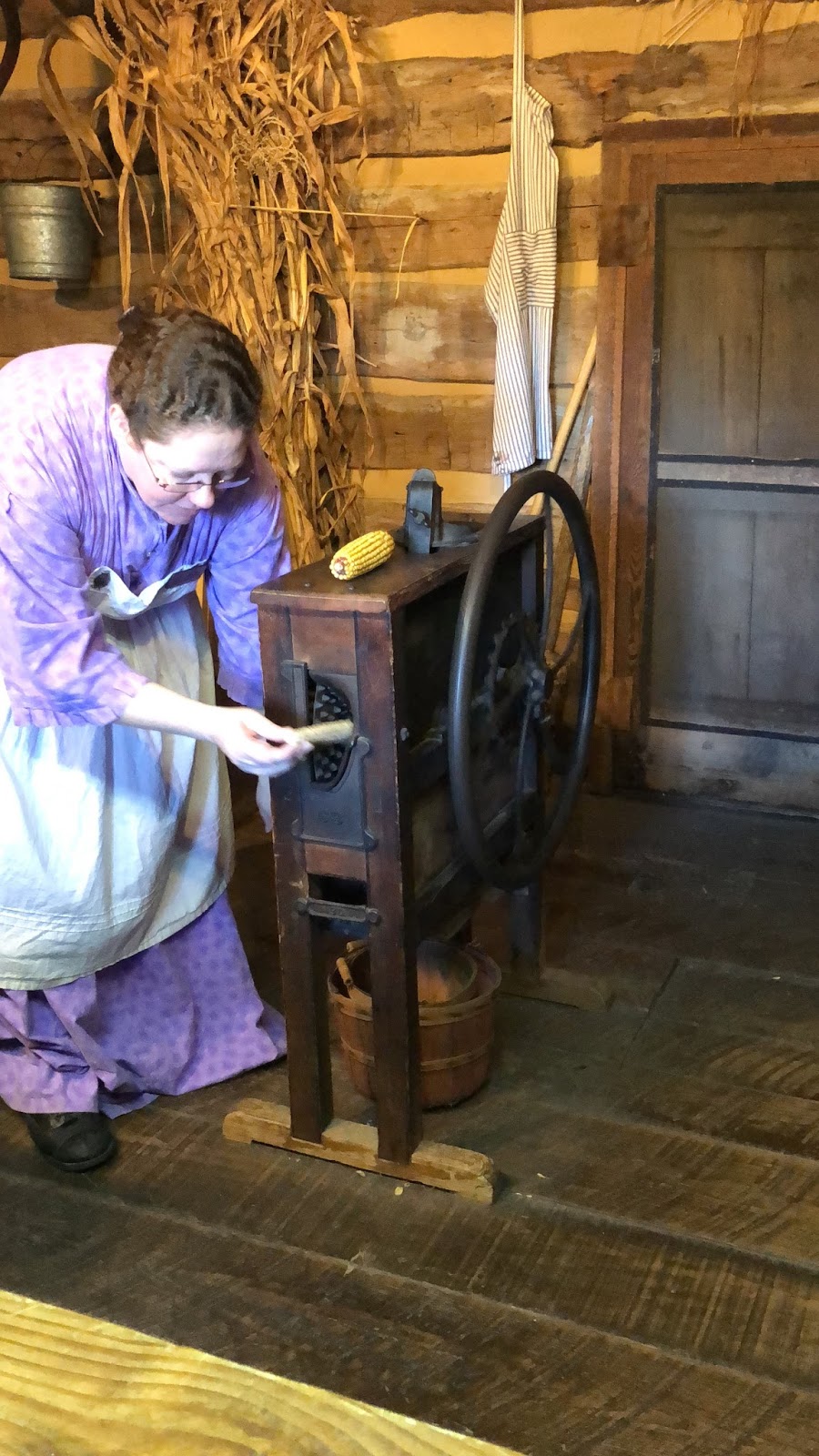
Inside the mill, our guide, Kelley, introduces us to the different types of corn available including a rare red corn that was sweeter than the yellow corn.

Kelley demonstrates how hard it was to grind the corn by hand.

There is a hand-cranked machine that shucked the corn kernels into a bucket (at the bottom).

Now, the heavy-duty mill machine. The belt (on the right) is driven by the water wheel (on the outside) that worked the machine. Lots of corn could be ground quickly. Of course, the machinery was dangerous and many families lost limbs and fingers.


Now we enter the Herb Garden just a short walk from the mill...


Some Christmas Decorations


Learn more about the village by checking out the official site - www.logcabinvillage.org

Log Cabin Village Address: 2100 Log Cabin Village Ln, Fort Worth, Texas 76109